


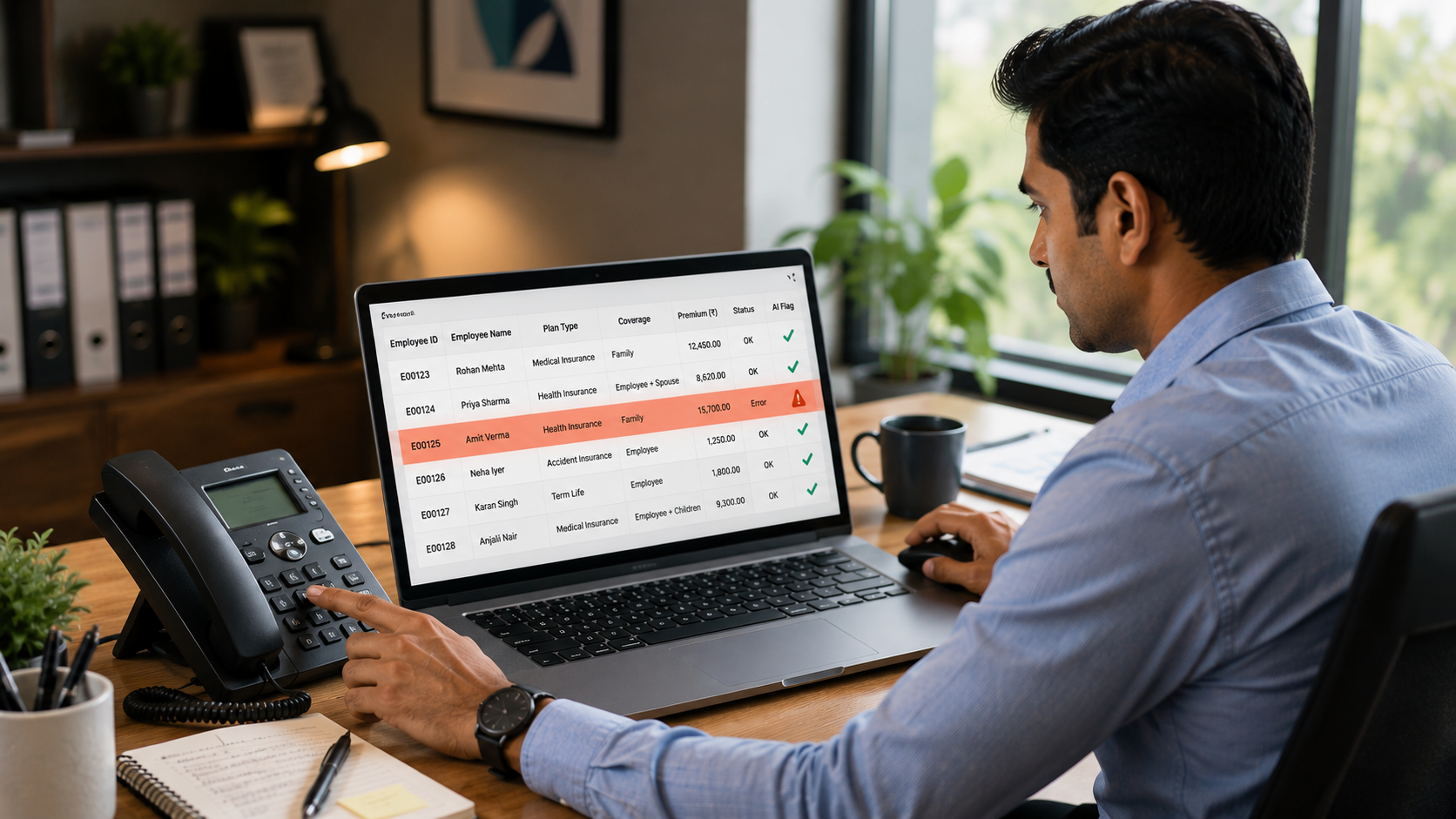

Every back-office vendor is talking about AI in PEO benefits support right now, and for good reason. Automation can pull data faster, flag mismatched invoices, and catch a missed enrollment deadline before it becomes a client problem. If you run a PEO, ASO, or staffing firm, that speed matters. But speed is not the same as resolution, and that distinction is where a lot of firms are getting the AI conversation wrong.
A tool can tell you that a carrier bill does not match your payroll deductions. It cannot tell you whether that happened because of a retro rate change, a missed termination, or a carrier system error, and it cannot pick up the phone to fix it. That gap between flagging a problem and resolving it is exactly why AI, automation, and cloud tools are already reshaping PEO back offices without eliminating the need for expert people who know how to act on what those tools find. The firms getting this right are not choosing between technology and expert support. They are using both.
Where AI Actually Earns Its Place in Benefits Support
Automation is not the enemy here, and it would be dishonest to pretend otherwise. AI in PEO benefits support is genuinely useful for volume and speed. It can flag mismatched invoices within minutes instead of days, track enrollment deadlines across hundreds of employees without missing a date, and surface missing data before it turns into a client escalation. For a PEO processing benefits across dozens of client groups, that kind of pattern matching and first pass data validation is not optional anymore. It is table stakes. The firms that ignore automation entirely are choosing to be slower than their competitors for no good reason.
What AI Still Cannot Do in Benefits Administration
The trouble starts when a firm assumes that because AI can flag an issue, it can also close the loop on that issue. Those are two different skills, and benefits administration is full of situations where flagging is easy but resolving requires judgment, history, and a phone call. Three areas make this especially clear.
Carrier Enrollments, Terminations, and Qualifying Events
Every qualifying life event, from a marriage to a dependent aging off a plan, comes with its own documentation and timing rules that vary by carrier. AI can flag that a change was submitted. It cannot judge whether the paperwork attached to that change is actually complete, and it cannot catch a carrier side processing error that has nothing to do with what your team submitted in the first place. Someone still has to look at the actual documents and know what a carrier expects to see.
COBRA Support and Reconciliation
COBRA comes with strict notification windows and premium calculations that shift the moment an employee’s status changes. A tool can track a date on a calendar just fine. What it cannot do is spot when a former employee’s COBRA election was processed incorrectly by the carrier, which is where most COBRA disputes actually start. COBRA support outsourcing works best when the team handling it understands the notification timeline well enough to catch a carrier mistake before it becomes a compliance problem for your client.
Billing Discrepancy Root Cause Analysis
Most automation tools stop at telling you that one number does not match another number. They rarely explain why, and PEOs that rely solely on automated alerts often watch the same discrepancy get re-flagged every single billing cycle without anyone ever resolving the underlying cause. Real benefits reconciliation outsourcing means someone actually traces the discrepancy back to its source, whether that is a retro rate change or a carrier system error, and closes it out instead of just noting that it happened again.
Why “AI-Powered” Marketing Claims Can Be Misleading for PEOs
Plenty of back-office providers now advertise AI-powered platforms as their main differentiator, as if automation alone sets them apart. At this point, it does not. Automation is table stakes across the entire outsourcing industry, and nearly every serious provider has some version of it. The real differentiator is what happens the moment that automation flags something the software cannot resolve on its own. That is where PEO back office automation claims tend to fall apart in practice, because a flagged alert sitting unresolved in a queue is not actually a solved problem. It is a delayed one.
What Expert PEO Support Actually Looks Like Alongside AI
The practical version of this is simpler than the marketing makes it sound. Automated tools handle the first pass data checks and deadline tracking, because that is genuinely what they do well. An expert back-office team then investigates whatever gets flagged, communicates directly with carriers to sort out the actual issue, and closes the loop with a resolution instead of leaving a client staring at an open alert. That combination, not either piece alone, is what AI in PEO benefits support should actually look like when it is working.
 How YEO Combines Automation With Expert PEO Back-Office Support
This is exactly the model our benefits support team runs on every day. We use automation to handle invoice billing reconciliation, carrier enrollments, COBRA support, benefit renewal audits, and 401K reconciliation at the volume a modern PEO actually needs. But every flag that automation surfaces gets reviewed by a person who understands what offshore benefits administration India teams can realistically own, and who knows how to get a carrier on the phone and get an answer. Technology catches the first flag. Expert people resolve it. Your client never sees the friction in between.
Frequently Asked Questions
Can AI handle benefits reconciliation for a PEO?
AI can compare numbers and flag mismatches between payroll deductions and carrier invoices, but it cannot investigate why a discrepancy exists or negotiate a correction with a carrier. Most PEOs still need a trained back-office team to close out what automation only identifies, especially during open enrollment.
What benefits tasks can automation actually replace?
Automation handles repetitive, rules-based tasks well, including tracking enrollment deadlines, flagging invoice mismatches, and sorting large volumes of carrier data. It struggles with judgment calls, like determining whether a qualifying event was documented correctly or why a carrier processed a termination incorrectly.
Why do benefits billing errors still happen with automation in place?
Automation flags that numbers do not match, but it does not investigate the cause. Root causes like retroactive rate changes, delayed terminations, or carrier system errors require someone to call the carrier, review the history, and confirm the correction. That step still requires a person.
Should a PEO outsource benefits support to software or a team?
Neither option alone is sufficient for most PEOs. Software without oversight misses context and cannot resolve disputes. A team without automation is slower on high-volume tasks. The strongest approach pairs automated first pass checks with expert PEO back-office support that resolves what the software flags.
How does an offshore back-office team improve benefits accuracy?
A dedicated back-office team reviews flagged discrepancies daily, communicates directly with carriers to resolve enrollment and billing issues, and catches patterns that automation alone would repeatedly flag without resolving. This reduces the number of billing errors that reach the PEO’s end clients.

Automation Finds the Problem. Expert Support Solves It.
AI is a genuinely useful part of benefits support, but it was never built to replace the judgment a carrier dispute or a documentation gap requires. The PEOs staying ahead right now are not choosing between a tool and expert support. They are letting automation do the flagging and letting trained people do the fixing, which is the only version of this that actually protects client relationships.
If your current setup is generating more flagged discrepancies than resolved ones, that is a sign the automation is working but the follow-through is not. Our benefits support team handles that follow-through directly, from carrier enrollments to COBRA reconciliation to benefit renewal audits, so nothing sits in a flagged queue waiting on a person. It is the same blended approach we outlined in how outsourcing your back office can cut costs by more than 50% without sacrificing accuracy, applied specifically to benefits administration.