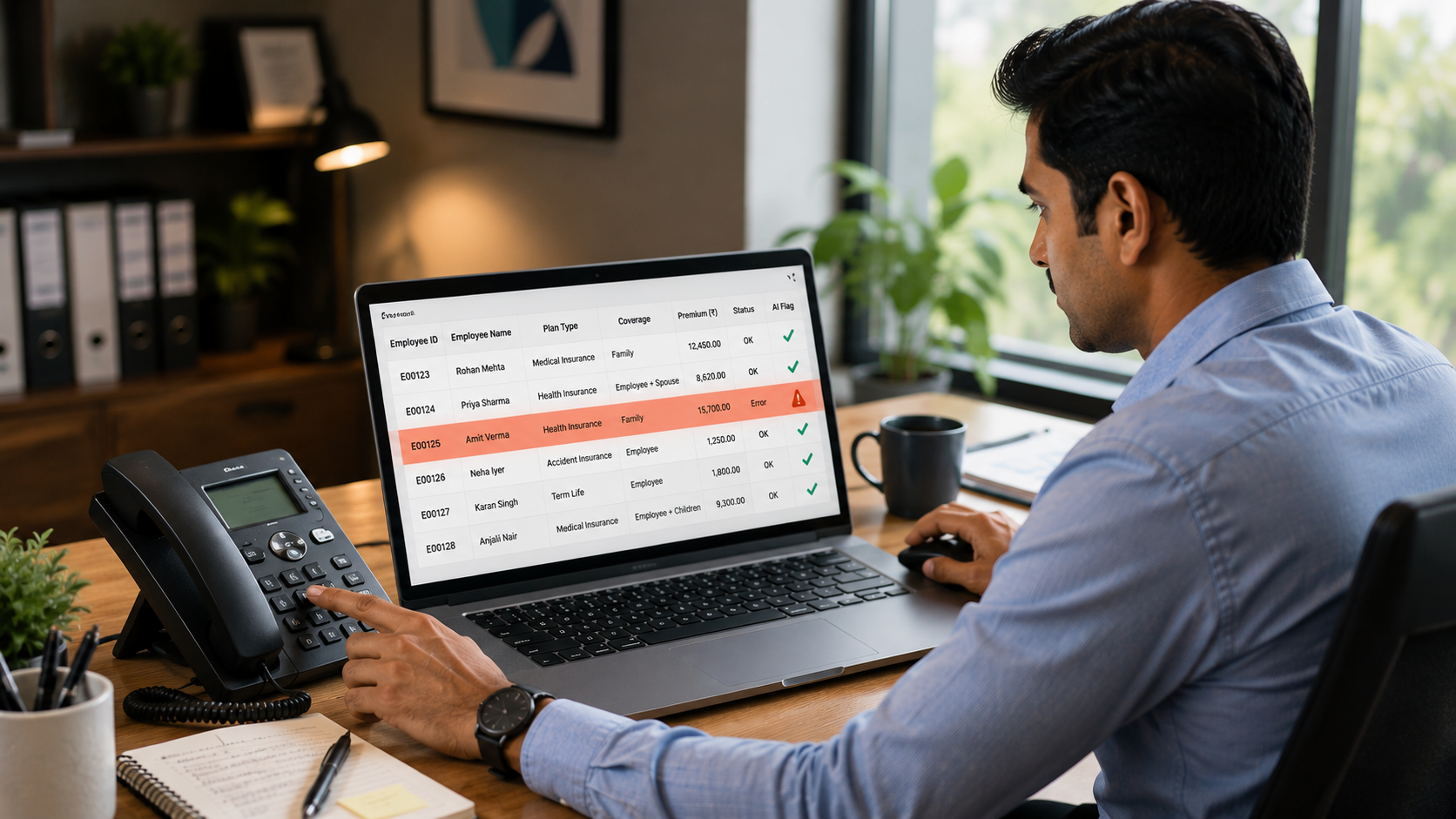




The conversation around AI automation back office outsourcing has shifted. It is no longer a future state discussion. In 2026, AI assisted workflows, cloud based platforms, and intelligent automation are already embedded in how the best outsourcing teams operate. For PEOs, staffing firms, and payroll providers, this means faster turnarounds, fewer errors, and better reporting, without having to hire a tech team or overhaul your existing systems. But here is what most articles miss: for small and mid size firms, the easiest way to access these tools is not buying them. It is partnering with a team that is already using them on your behalf.
Why “AI in Back Office” Sounds Complicated (But Isn’t)
Let’s clear the air. Most of what gets labeled “AI” in the back office world is not some futuristic robot replacing your staff. It is pattern recognition software that flags anomalies, auto populates fields, and catches the kinds of errors that slip past even experienced processors during a 200 client payroll run.
Think of it like spell check for operations. You still write the document. The tool just makes sure you do not send it out with typos. That is the practical reality of AI in back office outsourcing today. It supports human expertise rather than replacing it. And for PEO owners and COOs who are understandably skeptical of buzzwords, that distinction matters.
The Three Tools Reshaping Back Office Operations Right Now
There are three categories of technology that are making the biggest impact on outsourced back office work in 2026. Understanding the basics helps you ask the right questions when evaluating a partner.
The first is robotic process automation (RPA). This handles repetitive, rules based tasks such as data entry, file transfers between platforms, and reconciliation matching. If a task follows the same steps every time, RPA can do it faster and without fatigue.
The second is artificial intelligence and machine learning. These tools analyze patterns across large data sets. In practice, that means flagging payroll discrepancies before they become problems, identifying trends in benefits utilization, or catching duplicate entries across client accounts.
The third is cloud infrastructure. Cloud based platforms allow outsourced teams and their US clients to work from the same systems in real time, with full audit trails, role based access, and zero reliance on emailing spreadsheets back and forth.
Get AI powered back office support without building the tech yourself. Schedule a free consultation.
What AI Actually Does Day to Day in Payroll and Accounting
In automated payroll processing support, AI tools are being used to validate wage calculations against hours reported, cross reference tax withholding tables automatically, and flag records that fall outside normal parameters for a given client. This does not eliminate the need for a skilled payroll processor. It gives that processor a safety net that catches what manual review might miss.
On the accounting side, cloud based accounting outsourcing teams use AI assisted reconciliation tools that match transactions across bank feeds, general ledgers, and client invoicing systems. What used to take hours of line by line comparison now takes minutes, with exceptions routed to a human reviewer for final sign off.
The result is not just speed. It is consistency. When you are managing back office operations for dozens or hundreds of client companies, consistency is what protects you from compliance risk.
How Cloud Technology Eliminates the “Where Is That File?” Problem
If you have ever waited on an emailed spreadsheet, tracked down a missing document across multiple desktops, or lost visibility into a task because it lived on someone else’s hard drive, you already understand the problem that cloud based back office solutions for PEOs solve.
Cloud platforms give both your internal team and your outsourced partner access to the same data, the same dashboards, and the same workflow queues. Changes sync in real time. Version control is automatic. Permissions ensure the right people see the right information and nothing more.
For PEOs and staffing firms working with an offshore back office team, cloud infrastructure is what makes the partnership feel seamless rather than distant. Your outsourced team in India logs into the same system your operations manager uses in Dallas. There is no translation layer. No waiting for file transfers. Just shared visibility into the work that matters.

Automation vs. AI: What’s the Difference and Why It Matters for PEOs
These two terms get used interchangeably, but they are not the same thing, and knowing the difference helps you evaluate what a partner actually brings to the table.
Automation is about repeating a defined process without manual intervention. If step one is always followed by step two, automation handles the handoff. It is fast, reliable, and excellent for high volume, low variability tasks like generating reports, sending reminders, or moving data between systems.
AI goes a step further. It makes decisions based on data patterns. Where automation follows instructions, AI identifies when something does not look right and raises a flag. In back office operations for staffing firms, that might mean recognizing that a particular client’s payroll totals are trending 15% above the historical norm and alerting a supervisor before the run is finalized.
The most effective outsourcing teams use both. Automation handles the volume. AI handles the judgment calls. Human experts handle everything that requires context, client knowledge, and professional discretion.
How a Tech Enabled Outsourcing Partner Gives You These Benefits Without the Investment
Here is where the conversation gets practical. Building an internal tech stack that includes RPA, AI tools, and cloud infrastructure requires significant capital, dedicated IT staff, and ongoing maintenance. For a PEO with 50 to 500 worksite employees, that investment rarely makes financial sense.
But when you partner with a team like YEO HR India, those tools are already in place. YEO’s back office teams operate within cloud based environments, use automation to accelerate processing workflows, and apply AI assisted quality checks across payroll, accounting, and benefits administration. You get the output of a tech enabled operation without the overhead of building one yourself.
That is the real competitive advantage of outsourcing in 2026. It is not just about labor cost arbitrage anymore. It is about accessing capabilities that would cost six figures to develop internally, delivered through a partner who already has them running at scale.
FAQ: AI, Automation, and Back Office Outsourcing Answered Simply
How is AI being used in back office outsourcing?
AI is used primarily for anomaly detection, data validation, and predictive flagging. In payroll, it catches calculation errors and tax withholding mismatches. In accounting, it accelerates reconciliation by matching transactions across systems and highlighting exceptions for human review.
Can small PEOs benefit from AI powered back office support?
Absolutely. Small PEOs benefit the most because they typically cannot justify the cost of building AI capabilities internally. By partnering with a tech enabled outsourcing provider, they gain access to the same tools that larger firms use, without the capital investment.
What is the difference between automation and AI in back office operations?
Automation executes predefined tasks repeatedly and consistently. AI analyzes data patterns to make recommendations or flag issues. Automation handles the volume; AI handles the exceptions. Together, they create a faster and more accurate back office workflow.
Does outsourcing to an AI enabled team cost more?
Not necessarily. A specialized partner like YEO builds technology into its delivery model, so the cost of AI and automation tools is absorbed into the service rather than passed along as a separate line item. In most cases, firms still realize significant savings compared to running the same operations in house.
How does cloud technology improve back office accuracy?
Cloud platforms eliminate version control issues, reduce data transfer errors, and give both the client and the outsourced team real time access to the same information. This shared visibility means fewer miscommunications, faster issue resolution, and a complete audit trail for every transaction.
The Smartest Tech Investment Is One You Don’t Have to Make Yourself
AI and automation are not replacing the need for skilled back office support. They are making that support faster, sharper, and more scalable. For PEOs and staffing firms, the practical takeaway is this: you do not need to build a tech stack to benefit from one. The right outsourcing partner brings it to you.
Want to understand how this works in practice? Read our breakdown of how outsourcing your back office cuts costs, then connect with the YEO HR India team to explore what a tech enabled partnership could look like for your firm.