



As a PEO grows, the pressure usually shows up first in the back office. Payroll changes, client billing, reconciliations, reporting requests, tax follow-ups, and support tasks start piling up faster than an in-house team can handle them.
That’s why more U.S. PEOs are taking a task-based approach to offshoring in 2026. Instead of asking whether to outsource everything, they’re asking a better question:
Which PEO back-office tasks can move to India safely and which should stay in the U.S.?
In this guide, we break down the ideal task split across payroll, accounting, transaction processing, and admin support so PEO leaders can scale without losing control, visibility, or client confidence.
What Are PEO Back-Office Tasks, and Why Do They Become a Bottleneck?
PEO back-office work includes all the operational tasks required to support client employees, process payroll, maintain financial records, and ensure compliance.
These typically include:
- Back office payroll processing
- Client billing and invoicing
- PEO accounting and reconciliations
- Tax tracking and reporting support
- Employee data updates and audits
- Benefits administration support tasks
Why bottlenecks happen
As your PEO scales:
- Client volume increases faster than staffing
- Payroll complexity multiplies (multi-state, multi-frequency)
- Reporting demands grow
- Compliance timelines tighten
The result? Your high-value U.S. team gets stuck doing repetitive, rules-based work instead of focusing on client strategy and growth.
 Which PEO Back-Office Tasks Can Be Safely Outsourced to India?
The most effective way to approach offshoring is not by role, but by task type. Work that is repeatable, structured, and rules-based is typically the safest to move.
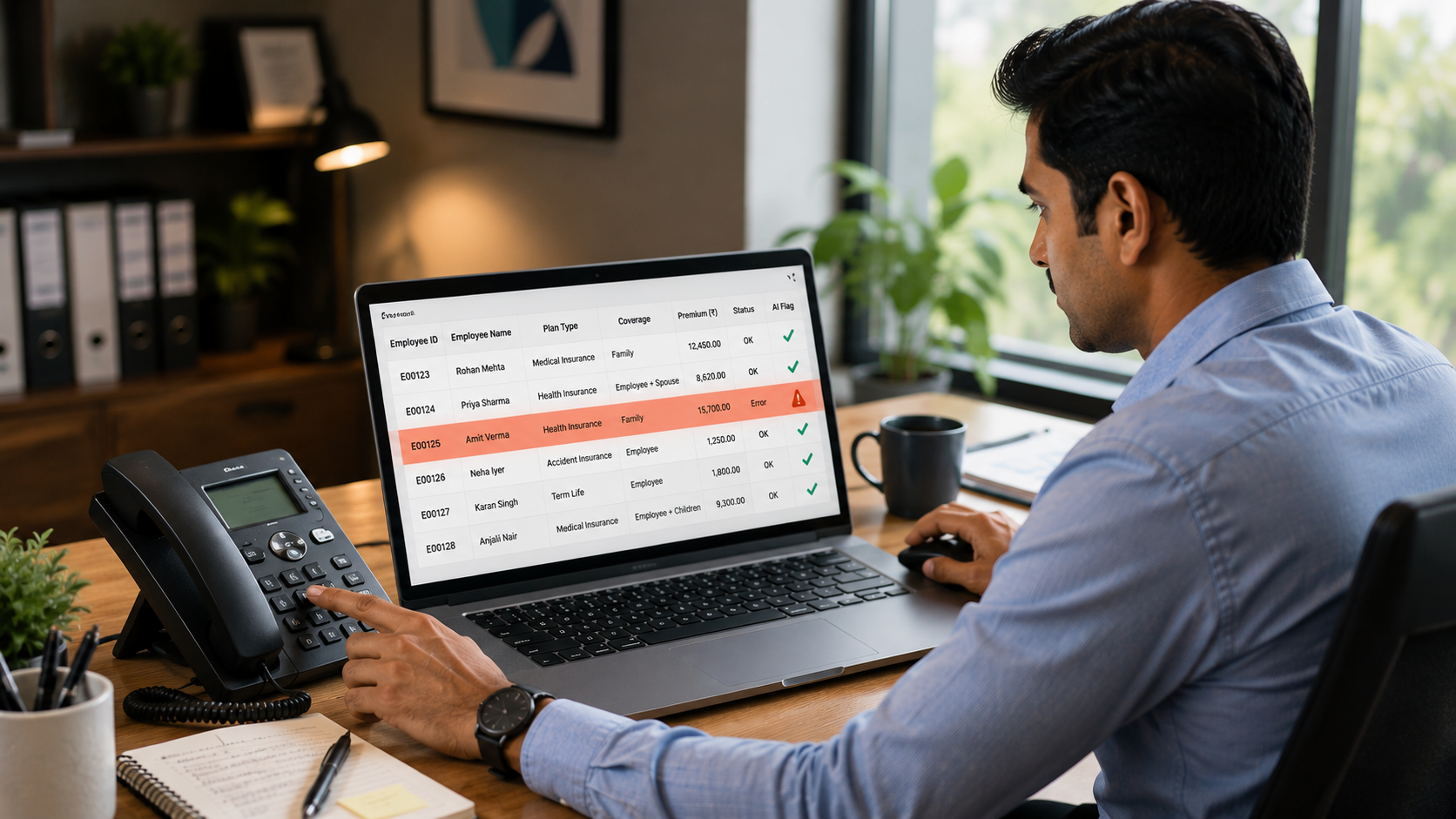
In payroll, this often includes preparation steps rather than final decisions. Offshore teams can handle data entry, validation, audit checks, and pre-processing tasks that ensure payroll is clean before approval. This reduces errors while giving the U.S. team more time to review rather than build from scratch.
On the accounting side, offshore support becomes even more valuable. Reconciliations, journal entry preparation, invoicing support, and month-end assistance follow clear processes and benefit from consistency. Over time, this creates stronger financial accuracy and faster close cycles.
Transaction processing is another major opportunity. Employee changes, onboarding updates, benefits data entry, and system maintenance are essential but time-consuming. When handled offshore with clear workflows, these tasks move faster without disrupting client-facing work.
Which Tasks Should Stay with Your U.S. PEO Team?
While many back-office functions can be offshored, the dividing line is clear when you look at risk and judgment.
Anything tied directly to compliance interpretation, client relationships, or final approvals should remain with the U.S. team. These responsibilities require context, accountability, and often real-time decision-making that is best handled locally.
There is also a trust component. Clients expect a familiar point of contact when issues arise or when guidance is needed. Keeping those interactions onshore ensures consistency and strengthens long-term relationships.
A simple way to think about it is this: if the task requires interpretation, ownership, or direct communication with a client, it stays. If it follows a defined process and produces a clear output, it can likely be supported offshore.
Explore which PEO tasks are ready to offshore
How India-Based Teams Support Back Office Payroll, PEO Accounting, and Transaction Processing
A strong offshore PEO support model works as an extension of your U.S. team—not a replacement.
Typical workflow structure:
India Team:
- Executes tasks
- Prepares reports
- Flags exceptions
- Maintains documentation
U.S. Team:
- Reviews outputs
- Approves critical items
- Handles clients
- Manages compliance decisions
Key benefits:
- Faster turnaround times (overnight processing)
- Reduced payroll cycle stress
- Lower cost per transaction
- Scalable staffing without hiring delays
How to Structure Control, Reviews, and Escalation Paths Across U.S. and India Teams
Control is what determines whether offshoring creates clarity or confusion.
The most successful PEOs build systems before they transition work. That starts with clear documentation. Every task should have a defined process, expected output, and review step. Without that foundation, even simple work can become inconsistent.
Review layers are equally important. Offshore teams should perform internal checks before handing work off, while U.S. teams focus on final approvals where needed. This creates accountability on both sides and prevents rework.
Communication also needs structure. Regular check-ins, clear escalation triggers, and shared systems ensure that nothing gets lost. When both teams operate with visibility into the same workflows, issues are identified early and resolved quickly.
Why Chennai, India Is a Strong Delivery Hub for PEO Back-Office Work
Chennai has become a leading hub for finance, payroll, and operational support, especially for companies serving U.S. markets.
The strength of Chennai comes from its combination of talent and experience. Many professionals are trained in accounting and finance, and a large portion of the workforce is already familiar with international business processes. This makes onboarding faster and reduces the learning curve for PEO-specific workflows.
There is also a strong infrastructure for outsourcing, with established systems, management practices, and communication standards. For PEOs, this means access to teams that can plug into existing operations without needing to build everything from scratch.
Common Mistakes PEOs Make When Offshoring Tasks—and How to Avoid Them
1. Offshoring Entire Roles Instead of Tasks
Fix: Break roles into tasks and offshore selectively.
2. Lack of Process Documentation
Fix: Build SOPs before transitioning work.
3. No Clear Ownership
Fix: Assign accountability for every task and outcome.
4. Poor Communication Structure
Fix: Set daily/weekly check-ins and escalation channels.
5. Expecting Instant Results
Fix: Plan for a 30–90 day ramp-up period.
FAQ: PEO Back-Office Tasks in India
What are the most common PEO back-office tasks outsourced to India?
Payroll support, reconciliations, billing, data entry, reporting prep, and admin support.
Is it safe to offshore payroll tasks?
Yes—if limited to processing, validation, and reporting support, with approvals kept in the U.S.
Can offshore teams handle PEO accounting?
Absolutely. Many firms use offshore teams for PEO accounting and back office accounting for PEOs, especially for reconciliations and month-end support.
What should never be offshored?
Client-facing decisions, compliance interpretation, and final approvals.
How do you maintain control over offshore teams?
Through SOPs, SLAs, layered reviews, and strong communication workflows.
Scale Without Losing Control
The smartest PEOs are not offshoring blindly. They are building a structure where the right work is handled by the right team.
When repetitive back-office tasks move to a dedicated offshore team, internal operations become more focused, more consistent, and easier to manage. Payroll cycles run smoother, accounting becomes more predictable, and leadership gains back time to focus on growth.
A well-structured delivery model in Chennai can support payroll, accounting, and transaction processing while your U.S. team stays centered on decisions, relationships, and strategy.
If back-office work is starting to slow down your PEO, this is the moment to step back, evaluate your task flow, and build a model that scales with you instead of against you.