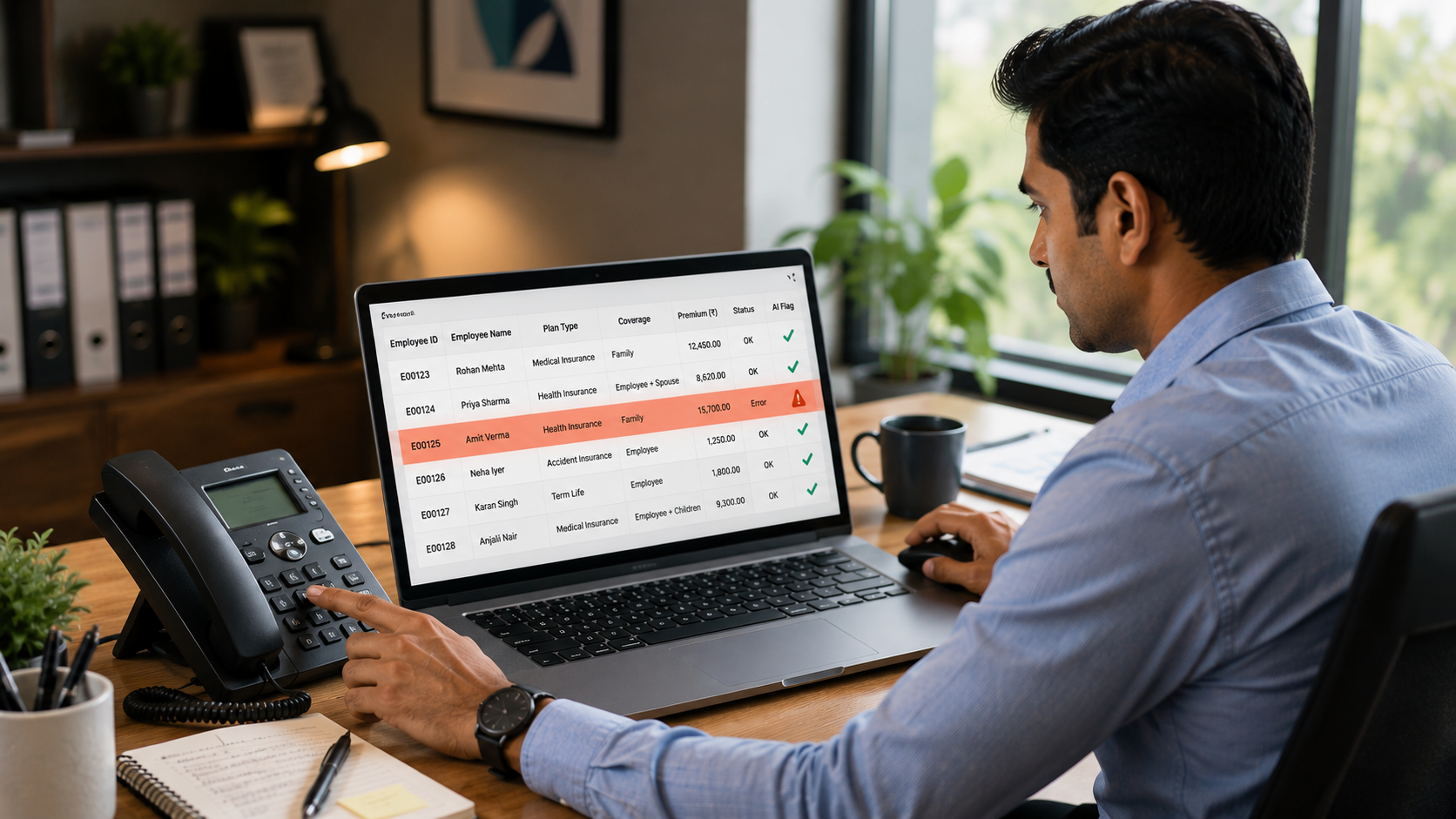




Somewhere in the last year, you have probably been pitched a version of this: replace your back-office team with AI tools and cut your overhead. It is an easy pitch to believe, because the software demos look clean and the pricing looks lower than a staffed team. But the pitch usually skips the part where the AI hits a case it cannot resolve, and someone still has to be there to catch it.
That gap matters more in this industry than most, because a missed workers’ comp filing or a mishandled carrier dispute does not just cost you money. It costs you the client relationship the whole back office exists to protect. We already covered this from the benefits side in AI can flag a benefits error, but it takes a team to fix it, and the same pattern holds true across every function a PEO runs, not just benefits.
Why This Decision Is Coming Up Right Now
AI-powered back-office and BPO platforms are marketing aggressively right now, leaning hard on cost and speed as the pitch. If your PEO is facing margin pressure, and most are, it is understandable to look at your back-office line item and wonder if it is the easiest one to cut. On paper, a software subscription looks a lot cheaper than a staffed team, and the demo always shows the tool working exactly as advertised. That is precisely why this decision keeps coming up, and why it deserves more scrutiny than a spreadsheet comparison alone can give it.
What AI-Only Tools Actually Handle Well
To be fair to the tools, they earn their place in plenty of areas. High volume data entry, first pass reconciliation, deadline tracking, and repetitive filing tasks are exactly what automation was built for, and it does them faster and more consistently than a person typically can. This is not an argument against technology. It is an argument for knowing exactly where its usefulness ends, because a PEO back office outsourcing risk shows up the moment you stop asking that question.
What Gets Lost When You Remove the Human Layer
The tasks that get harder to justify cutting are the ones that do not fit a template. AI-only back office risks tend to cluster around three areas in particular.
Carrier and Vendor Disputes
Software cannot pick up the phone and negotiate a correction with a benefits carrier or a workers’ comp provider. Disputes require a person who understands the history of the account and can actually advocate for the client’s outcome, not just log that a dispute exists.
Judgment Calls on Ambiguous Cases
Every PEO back office runs into edge cases: a partial termination, a retroactive rate change, an audit flag that does not fit a template. AI tools are built to handle the eighty percent that is repeatable. The twenty percent that is not repeatable is where client relationships are actually won or lost, and it is rarely the part any vendor demos for you.
Accountability When Something Goes Wrong
A software vendor is not going to sit on a call with your client explaining a compliance miss. A back-office team is accountable in a way a tool license simply is not, and that accountability is part of what you are actually paying for when you keep one on staff or outsourced.
What Happens to PEOs That Cut Their Team Too Fast
The pattern is fairly consistent. Firms that go all-in on AI-only tools tend to see an initial cost drop, which looks great in the first board update. Then unresolved discrepancies start piling up, client escalations follow, and eventually the firm ends up rebuilding a back-office team, usually under worse terms and at a higher cost than if they had simply kept one in the first place.
The Better Question to Ask
The real question is not whether to choose AI or a team. It is how to get a team that already uses AI well. Reframed that way, the decision stops being about cutting a cost center and starts being about finding a partner that has already solved the blend for you, which is a much easier problem to hand off than trying to build it internally from scratch.
 How YEO Approaches This
We already use automation and AI tools internally across accounting, payroll, benefits, and workers’ comp support, precisely because it makes our team faster at the repeatable parts of the job. What that automation flags still goes to a trained person who resolves it, communicates with carriers and vendors directly, and takes ownership of anything that does not fit a standard pattern. You get the cost benefit of automation without losing the judgment layer that actually protects your clients.
Frequently Asked Questions
Can AI fully replace a PEO’s back-office team?
Not for most PEOs. AI tools handle repeatable, high-volume tasks well, but they cannot negotiate carrier disputes, make judgment calls on ambiguous cases, or take accountability when something goes wrong. Most firms that remove human oversight entirely end up rebuilding a team within a year.
What happens if a PEO relies only on AI for back-office work?
Data entry and tracking improve initially, but unresolved discrepancies tend to accumulate because the software flags problems without resolving them. Over time this shows up as client escalations, compliance gaps, and eventually the cost of rehiring a team to catch what automation missed.
Is it safe to cut an outsourced back-office team for AI tools?
It depends on the task. Cutting human oversight from repeatable data entry is usually safe. Cutting it from carrier disputes, compliance judgment calls, or client-facing accountability is where most PEOs run into trouble, since those functions require a person, not just a tool.
What tasks should stay with a human back-office team?
Carrier and vendor negotiations, ambiguous or edge-case decisions, compliance judgment calls, and anything requiring direct accountability to a client should stay with a trained person. Repetitive data entry, deadline tracking, and first pass reconciliation are safe to automate.
What does a blended AI and human back-office model look like?
In a blended model, automation handles high-volume, rules-based work like data entry and invoice matching, while a trained back-office team investigates flagged issues, communicates with carriers and vendors, and takes ownership of anything that does not fit a standard pattern.

The Real Cost Isn’t the Team. It’s What You Lose Without One.
AI-only back-office tools will keep getting pitched to PEOs as a way to cut costs, and on a spreadsheet, that pitch will keep looking reasonable. What it misses is that the cost of a back-office team was never really about data entry. It was about having someone accountable when a carrier dispute, a compliance flag, or an edge case landed on your desk. Cutting that layer does not remove the risk. It just moves the risk back onto you.
If you are weighing this decision right now, it is worth talking to a back-office team before you talk to another software vendor. Our back-office team already builds automation into how we support PEOs across payroll, benefits, and workers’ comp, and we have written specifically about what US PEOs can safely offshore in 2026 if you want to see where the line actually sits between tool and team.